The progress we don't see
It’s hard to “see” progress because progress is often defined by the number of people who aren’t dying of cancer or heart disease, who aren't starving, or who aren’t living in the dark without electricity (among other things).
We don’t see that kind of progress because we’re focused on the people still suffering, and so it looks like very little is changing.
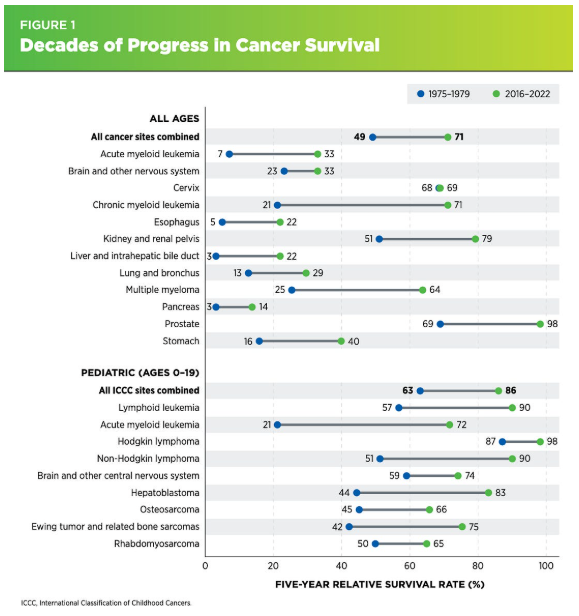
But rest assured, progress is being made. As just one example, look at the chart below. The five-year relative survival rate for US cancer patients rose from 49% for those diagnosed in 1975–1979 to 71% for those diagnosed in 2016–2022, according to the American Association for Cancer Research’s 2026 Cancer Progress Report (h/t Human Progress).
Progress is always being made somewhere, somehow. We just need to take a second to notice.